

Indicting Raul Castro does not legally justify invading Cuba, contrary to the Justice Department’s flawed theory for the Venezuela invasion.
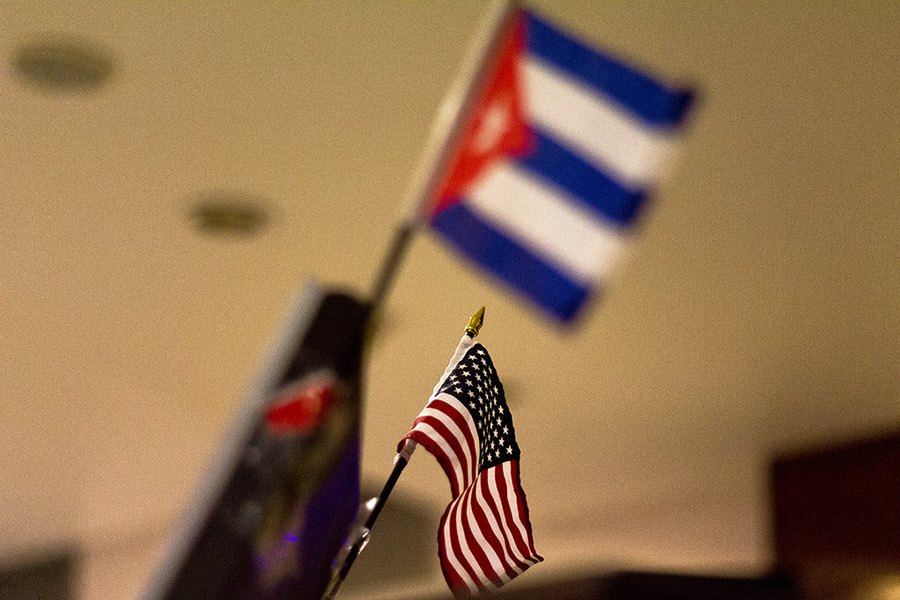
On May 20, acting Attorney General Todd Blanche announced the indictment of the 94-year-old ex-president of Cuba, Raúl Castro. He was indicted along with five others for the killing of four people 30 years ago when Cuba shot down a plane in its airspace flown by a dissident organization based in the United States.
The indictment was returned under seal in Miami in April, around the same time President Trump renewed his threat to take military action against Cuba. Trump’s latest threats are on top of crippling economic sanctions and an embargo that prevents Cuba from importing oil, with devastating effects on its economy. Despite Trump’s “maximum pressure campaign,” which aims to collapse the Cuban government by the end of 2026, Cuba has refused Trump’s demands.
With Cuba holding out, Trump has reportedly grown impatient. The U.S. military has dramatically increased spy plane overflights of Cuba, consistent with the pattern before the Venezuela invasion. And the CIA director, John Ratcliffe, visited Cuba on May 14 “to deliver a warning to the government that it had to make economic changes and stop allowing Russia and China to operate intelligence posts in Cuba.” The Trump administration’s diplomacy threatens military action while offering economic and security cooperation if Cuba makes “fundamental changes” to its economy and foreign policy. And now there is reporting that “[t]he Pentagon has spent months positioning the troops and weapons needed for the U.S. to launch a military attack on Cuba.”
The Trump administration’s coercive diplomacy violates not only international law but also U.S. law. The UN Charter prohibits the use of force or the threat to use force against the territorial integrity or political independence of another state, except in instances of imminent self-defense. The charter is a treaty of the United States. The United States was the first major power to ratify the UN Charter, with the advice and consent of the Senate, and President Truman deposited the instrument of ratification on Aug. 8, 1945. And while the president possesses broad authority to use military force abroad under Article II of the Constitution, no president in modern times has (openly) claimed the authority to invade another country to replace its leaders with ones friendly to the United States and U.S. companies.
But the Trump administration claims to have found a legal workaround for regime change in the Western Hemisphere: indict a foreign leader and then justify an invasion as a giant law enforcement operation. That was the legal justification for the Venezuela invasion, and now the Castro indictment appears to follow the same path. As the New York Times has reported, the charges have “laid the grounds for potential action by the military to remove him from the country through a means similar to how U.S. Special Operations forces used an indictment against Nicolás Maduro, the former leader of Venezuela, to swoop into Caracas in a brazen operation in January and capture him.”
The indict-and-invade theory is not only an absurd pretext, but it is also a legally baseless justification to invade. The UN Charter binds the president and contains no law enforcement invasion exception.
The Trump Administration’s Renewed Threats Against Cuba
On May 1, the Trump administration issued an executive order that imposes additional sanctions on Cuban officials. The fact sheet accompanying the executive order notes, threateningly, that the United States has taken military action against Venezuela, Iran, and alleged drug boats. The same day, Trump quipped at an event in Florida that “Cuba will be next” and that, “[o]n the way back from Iran, we’ll have one of our big—maybe the USS Abraham Lincoln aircraft carrier, the biggest in the world. We’ll have that come in, stop about 100 yards offshore, and [Cuban leaders will] say, thank you very much, we give up.”
On May 4, on a conservative radio show, in response to a question whether he planned to “do for Cuba what you’ve done for Venezuela—bring in new leadership and free those people,” Trump said Cuba is “devastated right now,” so “it would be an honor to free it up.” He repeated the threat to park the USS Abraham Lincoln off the coast. And he said he had an “obligation, frankly, to do something” for the Cuban people in the United States who voted for him, comparing oppression in Cuba to Iran. Ratcliffe’s offers and threats, and the Justice Department’s decision to pursue an indictment against Castro, are part of Trump’s attack on Cuban sovereignty.
The threats against Cuba started on Jan. 11. Trump threatened Cuban officials that, following the Venezuela operation, “I strongly suggest they make a deal, BEFORE IT IS TOO LATE.” On March 16, he stated, “I do believe I’ll have the honor of taking Cuba” and “can do anything I want with it.“ At the same time, the administration reportedly urged Cuba to privatize its oil industry. Cuba rejected the demands, prompting the renewed threats, the visit by the CIA director, and now the indictment of Castro.
The Legal Flaws in the Trump Administration’s Indict-and-Invade Theory
The Department of Justice’s Office of Legal Counsel (OLC) offered the indict-and-invade justification for regime change in Venezuela. On Jan. 3, the U.S. military invaded Venezuela, captured Nicolás Maduro and his wife, Cilia Flores, and transported them to New York City to face federal charges, where they await trial today.
OLC’s Venezuela opinion, which the administration may rely on to invade Cuba under the pretext of capturing Castro, contains two parts. First, the opinion did not address whether the Venezuela invasion would comply with international law (because it would not), concluding instead that the United States may “override” international law. Second, OLC’s analysis determined that capturing Maduro to stand trial in the United States is sufficiently in the “national interest” to justify ordering an invasion. The conclusion that, under Article II, the president can order a full-scale military invasion to carry out a law enforcement rendition raises significant questions. But that conclusion is unnecessary to address because the UN Charter clearly prohibits such an operation.
This is the Venezuela opinion’s analysis of whether international law binds the president:
We do not reach the question [whether the Venezuela military operation is consistent with international law] because it is unnecessary to address the issue you raise: that is, “[i]nternational law … does not restrict the President as a matter of domestic law,” Memorandum for William J. Haynes II. General Counsel of the Department of Defense, from Jay S. Bybee, Assistant Attorney General, OLC, Re: Legal Constraints to Boarding and Searching Foreign Vessels on the High Seas at 18 n.18 (June 13, 2002), when it comes to extraordinary rendition. See also Override International Law in Extraterritorial Law Enforcement Activities [sic], 13 Op. O.L.C. Op. 163 (1989) (“Override Opinion”); Memorandum for Jamie S. Gorelick, Deputy Attorney General, from Richard L. Shiffrin, Deputy Assistant Attorney General, OLC, Re: Meaning of “Covert Action” at 6 & n.7 (Mar. 28, 1997).
Because the UN Charter is a treaty of the United States, not just international law, the opinion’s brief analysis of international law misses the question. The passage cites a 1989 opinion by then-Assistant Attorney General (later Attorney General) William Barr, “Authority of the Federal Bureau of Investigation To Override International Law In Extraterritorial Law Enforcement Activities,” for the proposition that the United States can override “international law.” But it fails to recognize that the Barr opinion analyzed the UN Charter as a treaty—that is, as domestic law. Barr’s opinion reversed a 1980 OLC opinion that had determined the FBI did not have the authority to arrest foreign suspects in foreign countries without the foreign government’s consent.
The Barr opinion advised that the UN Charter does not prohibit a law enforcement rendition on foreign soil on two grounds. First, the opinion concluded that Article 2(4) does not clearly apply to ordinary law enforcement operations. Second, more expansively, the opinion determined that, in any event, the president has inherent authority to order such actions in contravention of the charter. That determination relied on the contention that Article 2(4) of the charter is not “self-executing,” in the sense that it does not provide a “rule of decision for a United States court.” The opinion concluded that a non-self-executing treaty “‘addresses itself to the political, not the judicial department; and the legislature must execute the [treaty] before it can become a rule for the Court,’” quoting Chief Justice John Marshall’s holding in Foster v. Neilson.
On this latter point, the Barr opinion is clearly wrong. It is a non sequitur. The distinction between a self-executing and non-self-executing treaty is irrelevant to whether the treaty is domestic law that the Constitution’s Take Care Clause binds the president to follow. As a treaty of the United States, the UN Charter is, under Article VI of the Constitution, “the supreme Law of the Land,” the same as other “Laws of the United States.” Whether a treaty is self-executing is only relevant to whether the treaty can be enforced in court, which is what the quoted language in Foster addresses, not to whether it binds the executive branch as domestic law. Numerous scholars, such as Brian Finucane and Curtis Bradley, have pointed out this flaw in the Barr opinion. But OLC fails even to acknowledge the question the Barr opinion addressed, much less confront its clear error. The error wholly undermines OLC’s conclusion that the UN Charter could be ignored in the Venezuela invasion.
That brings us back to the part of the Barr opinion that states Article 2(4) does not apply to ordinary law enforcement operations to arrest a foreign suspect abroad. To be sure, the United States military has engaged in discreet capture operations abroad, but none involved an invasion aimed at regime change. Whatever the merits of that conclusion in the opinion, the UN Charter surely prohibits a military invasion of Cuba to remove Castro. That is an attack on the state itself and its political independence, which Article 2(4) prohibits.
The United States cannot justify invading Cuba based on self-defense. If it could, the indictment-and-invade pretext would be unnecessary. Absent a UN Security Council resolution, countries may use force only if justified by self-defense in response to an “armed attack” (Article 51). As a previous article explained with respect to Venezuela:
Most states view the “inherent right of individual or collective self-defence” described in Article 51 [of the UN Charter] as applying where there has been (or imminently will be) armed violence whose “scale and effects” rise to a level of severity above “mere frontier incidents” and other minor hostile encounters. The United States has long rejected this view and asserted that any level of armed violence can constitute an armed attack triggering the right of self-defense. But it has still maintained that an armed attack must entail some degree of “direct physical injury and property damage … like that which would be considered a use of force if produced by kinetic weapons.”
The Trump administration cannot make the case that Cuba poses a threat to the United States that justifies military action under Article 51, even accepting the United States’ expansive interpretation. Cuba has not engaged in an armed attack against the United States that justifies self-defense, poses no imminent threat of military action, has no military capacity to attack the United States, and has repeatedly denied any hostile intent.
Recently, the administration has pointed to Cuba’s alleged receipt of drones from Russia and Iran, and the presence of Iranian military advisers, without any indication that Cuba plans to attack the United States. In January, imposing sanctions, the executive order declared that the Cuban “regime aligns itself with—and provides support for—numerous hostile countries, transnational terrorist groups, and malign actors adverse to the United States, including the Government of the Russian Federation (Russia), the People’s Republic of China (PRC), the Government of Iran, Hamas, and Hezbollah.”
The executive order further alleged that Cuba “blatantly hosts dangerous adversaries of the United States, inviting them to base sophisticated military and intelligence capabilities in Cuba that directly threaten the national security of the United States,” “continues to build deep intelligence and defense cooperation with the PRC,” and “welcomes transnational terrorist groups, such as Hezbollah and Hamas, creating a safe environment for these malign groups so that these transnational terrorist groups can build economic, cultural, and security ties throughout the region and attempt to destabilize the Western Hemisphere, including the United States.”
None of these nations or groups, except Iran, has engaged in attacks against the United States, and the United States has not connected Cuba to the armed conflict with Iran. Nor do any of them pose an imminent threat of attacking the United States. Absent an imminent threat from these actors emanating from Cuba, and Cuba’s inability or unwillingness to address it, these allegations fall short of even a broad conception of self-defense under Article 51. The allegations establish at most that Cuba supports adversaries of the United States. But Article 2(4) of the UN Charter expressly prohibits the use of force or threat of the use of force against the “political independence” of another state.
Tellingly, in relying on the view that the president can simply ignore the UN Charter, the OLC chose not to address whether the Venezuela invasion complied with Article 51. And there, the United States had pointed to Venezuela’s connection to fentanyl trafficking by a designated foreign terrorist organization, Tren de Aragua, as to which the United States claimed (however erroneously) a right to self-defense. The argument that Cuba is involved in an armed attack or imminent armed attack would lack even that thin predicate.
Moreover, even where a country has the right to defend itself, its actions must be a necessary and proportionate response to the threat of armed attack. Trump and his officials, however, have repeatedly said that Cuba is on the verge of collapse due to the United States embargo and sanctions. And the terms the Trump administration seeks belie the justification for an invasion, with the administration centering most of its demands on financial benefits for the United States and U.S. companies, and not security guarantees that would address the alleged threat posed by Cuba.
Finally, it would be even more problematic to invoke Article 51 to justify an invasion to remove Castro, a 94-year-old former president. Unless removing him was connected to a broader justification for an invasion—deposing the entire Cuban government and installing one aligned with the United States—capturing Castro would not address the threat alleged as the basis for exercising self-defense.
Since an invasion of Cuba would be unlawful, the Trump administration’s attempt to coerce Cuba into making economic and political concessions by threatening to invade is also unlawful. The UN Charter also prohibits the “threat” to use force against a state’s territorial integrity or political independence.
The Indict-and-Invade Theory Undermines the Military’s Compliance With International Law
The conclusion that the United States can invade another country in violation of international law also amounts to a dramatic departure for the military, which, as a core principle, aims to comply with international law. On this point, the Venezuela opinion notably fails to mention the invasion of Panama, the closest modern parallel to the invasion of Venezuela. In 1989, the military invaded Panama and captured Manuel Noriega, a dictator, who had been indicted in Miami on drug trafficking charges the year before and was later convicted. Perhaps the OLC opinion omitted it because the George H.W. Bush administration did not cite Noriega’s indictment to justify the invasion. Rather, President Bush explained in a War Powers Report to Congress that “[t]he deployment of U.S. Forces is an exercise of the right of self-defense recognized in Article 51 of the United Nations Charter and was necessary to protect American lives in imminent danger and to fulfill our responsibilities under the Panama Canal Treaties.” The administration at least attempted to justify the invasion as consistent with the UN Charter.
Moreover, the George W. Bush administration brought U.S. detention and interrogation operations into compliance with Common Article 3 of the Geneva Conventions after the Supreme Court concluded in Hamdan v. Rumsfeld that Common Article 3 applied to the non-international armed conflict with al-Qaeda. The administration did not try to “override” Common Article 3, even though, for years, the administration had dismissed the Geneva Conventions as quaint and inapplicable to the novel armed conflict with a stateless terrorist organization. The executive branch attempted to ensure that all of its operations, from detention to interrogation, complied with Common Article 3.
More Troubling Implications for the Department of Justice
The Venezuela opinion’s failure to analyze thoroughly the dispositive legal question conflicts with core tenets of OLC practice. Under OLC principles, which have been in place across multiple administrations, OLC is supposed to consider all applicable law, including laws that bind the executive branch, even if they are not enforceable in court. OLC is supposed to provide “accurate and honest appraisal of applicable law, even if that appraisal will constrain the Administration’s or an agency’s pursuit of desired practices or policy objectives.” And OLC is supposed to take into account past executive branch practice. That obligation is also inconsistent with accepting the ruse that the Venezuela invasion—or, a potential invasion of Cuba—was motivated by law enforcement objectives.
Not only does the Trump administration’s law enforcement invasion theory fail legally, but the approach also further undermines the Department of Justice’s integrity. Although law enforcement action is an important national security tool, and national security investigations are coordinated to a far greater extent than ordinary domestic law enforcement actions, Justice Department charging decisions should follow the fundamental principles that ensure prosecutions are free from political considerations. That was not an issue with the Maduro indictment, because it preceded the Venezuela invasion by several years. But an indictment of Cuban officials, after so many years of inaction, as part of an invasion plan, raises serious questions about Justice Department independence.
The Department of Justice is being used as a foreign policy tool at a time when it is abandoning norms of institutional independence and integrity to serve as a political weapon. The department is not driving the decision. And despite its claim that justice has been delayed, the department did not pursue the case in Trump’s first term. Whether the Justice Department analyzed in good faith the potential legal defenses raised by Cuba, and that Castro could invoke, is open to doubt. If a regime leader, such as Castro, were rendered from Cuba for trial in the United States, it would be of little consequence whether the prosecutions succeed. He could likely be detained long enough to support the United States’ real objective—regime change in Cuba.
* * *
In sum, the UN Charter binds the executive branch and prohibits an invasion or the threat of an invasion to effect regime change, regardless of how the operation is characterized. The Venezuela opinion overlooks this dispositive legal question. And even if the charter is not technically enforceable against the administration (which it is), threatening to use force against another country in violation of international law dramatically departs from U.S. compliance with the rule of law.
– Christopher Hardee, Published courtesy of Lawfare.