

Columnaris disease pathogens, which were previously only found in Asia and the United States, were identified in samples from São Paulo, Minas Gerais, and Paraná. This finding underscores the need for epidemiological surveillance and new vaccines.
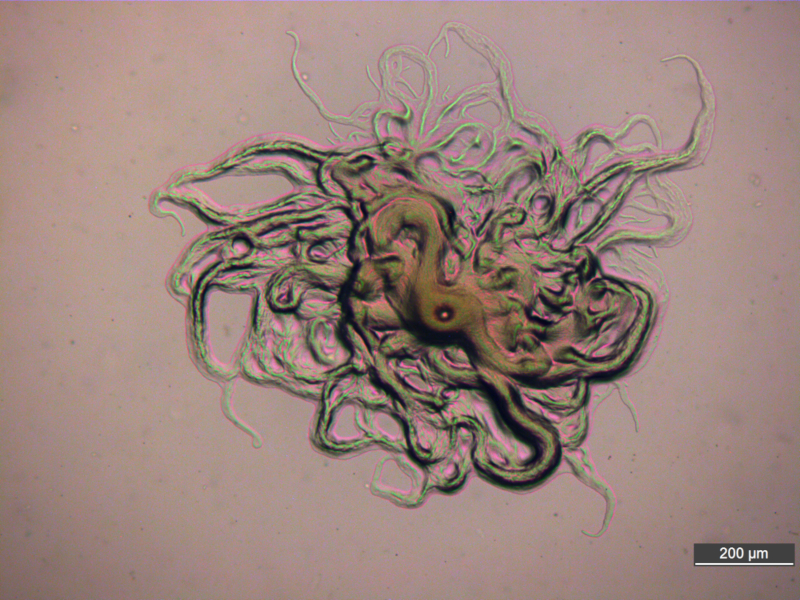
For the first time in Brazil, scientists have identified the presence of bacteria that cause columnaris disease, a serious disease in farmed fish intended for human consumption. Previously, different species of the genus Flavobacterium had only been detected in fish farms in Asia and the United States.
This disease primarily affects farms raising Nile tilapia (Oreochromis niloticus), also known commercially as Saint Peter, a species of African origin. However, it also affects farms raising native Brazilian species, such as tambaqui, pacu, and Amazon spotted catfish. These findings underscore the need for epidemiological surveillance and vaccine development.
“The initial identification of bacteria of this genus is done through visual examination of the colonies under a microscope. But since these microorganisms glide through the culture medium, depending on the medium used, the colony can become transparent and almost invisible. Therefore, extra care is needed during visual examination,” says Daniel de Abreu Reis Ferreira, the first author of the study. Ferreira conducted the research with a scholarship from FAPESP during his doctoral studies at the Aquaculture Center of São Paulo State University (CAUNESP) in Jaboticabal.
The study was published in the journal Microbial Pathogenesis and also includes authors from Zambeze University in Mozambique.
Skin disease
Until recently, the four species of Flavobacterium that were identified were considered a single species: Flavobacterium columnare. This is where the name of the disease comes from. Columnaris disease causes whitish lesions on the skin and fins, as well as necrosis in the gills of fish.
“The bacteria feed on epithelial cells and kill the fish within a few days, especially larvae and fry,” explains Fabiana Pilarski, a professor at CAUNESP who supervised Ferreira’s doctoral research.
Pilarski is an associate researcher at the Science Center for the Development of Aquaculture Health, based at the Fisheries Institute.
Among the 11 strains isolated in the study, six were of the Flavobacterium oreochromis species. Until then, this species was known in Brazil to infect only tilapia, the most widely farmed fish in the country and worldwide. Now, the pathogen has been detected in samples of native fish raised for consumption, including tambaqui (Colossoma macropomum), lambari (Astyanax lacustris), and pacu (Piaractus mesopotamicus).
Another notable finding was the first detection of Flavobacterium davisii in an Amazon spotted catfish (Pseudoplatystoma punctifer). “This case shows that the bacterium can also infect Siluriformes, a different order of fish from those it usually colonizes, which broadens the range of potential hosts for this pathogen,” Ferreira explains.
The analyses also showed that pathogens previously found only in Asia and the United States are adapted to Brazil’s climate. In the tests, F. davisii and F. inkyongense – another bacterium identified in the analyses – achieved ideal growth conditions at 28 °C, which is the average temperature of Brazil’s inland waters.
Two other species, F. oreochromis and F. indicum, were detected in the analyses and showed a preference for higher temperatures. F. indicum peaked in growth at 35 °C, meaning it may be favored by warming waters. Another alarming finding is that, at 28 °C, the bacteria exhibited high biofilm production.
“A biofilm is a protective matrix that allows bacteria to remain dormant when conditions are unfavorable and resume multiplication when the environment becomes conducive,” says Pilarski.
“This underscores the importance of robust hygiene and disinfection protocols to prevent the colonization of equipment used for fish handling,” Ferreira adds.
While nearly all the analyzed species showed a significant decrease in biofilm formation at 35 °C, F. davisii exhibited significant biofilm production at this temperature. However, the researchers observed that the bacterium’s mobility was impaired at this temperature.
“This suggests an adaptation – what we call a metabolic trade-off – in which it loses by moving less but gains by producing biofilm and surviving,” Ferreira explains.
Vaccines and salt
The good news is that studies by other research groups show that Flavobacterium bacteria do not tolerate salinity well. Therefore, adding salt to the water could reduce the pathogen’s ability to colonize. However, more research is needed to determine the optimal salinity levels for each species of fish.
Researchers are conducting genomic studies on the bacteria they have found to identify potential vaccine targets. The goal is to develop autogenous vaccines, which are tailored to the strains present at each production site.
“Since columnaris disease primarily affects the skin, a vaccine in the form of a bath treatment using the weakened bacterium would be ideal, benefiting young fish in particular. This is a stage when the immune system is still developing, and because they’re small, large numbers of fingerlings could be vaccinated simultaneously,” says Pilarski.
