

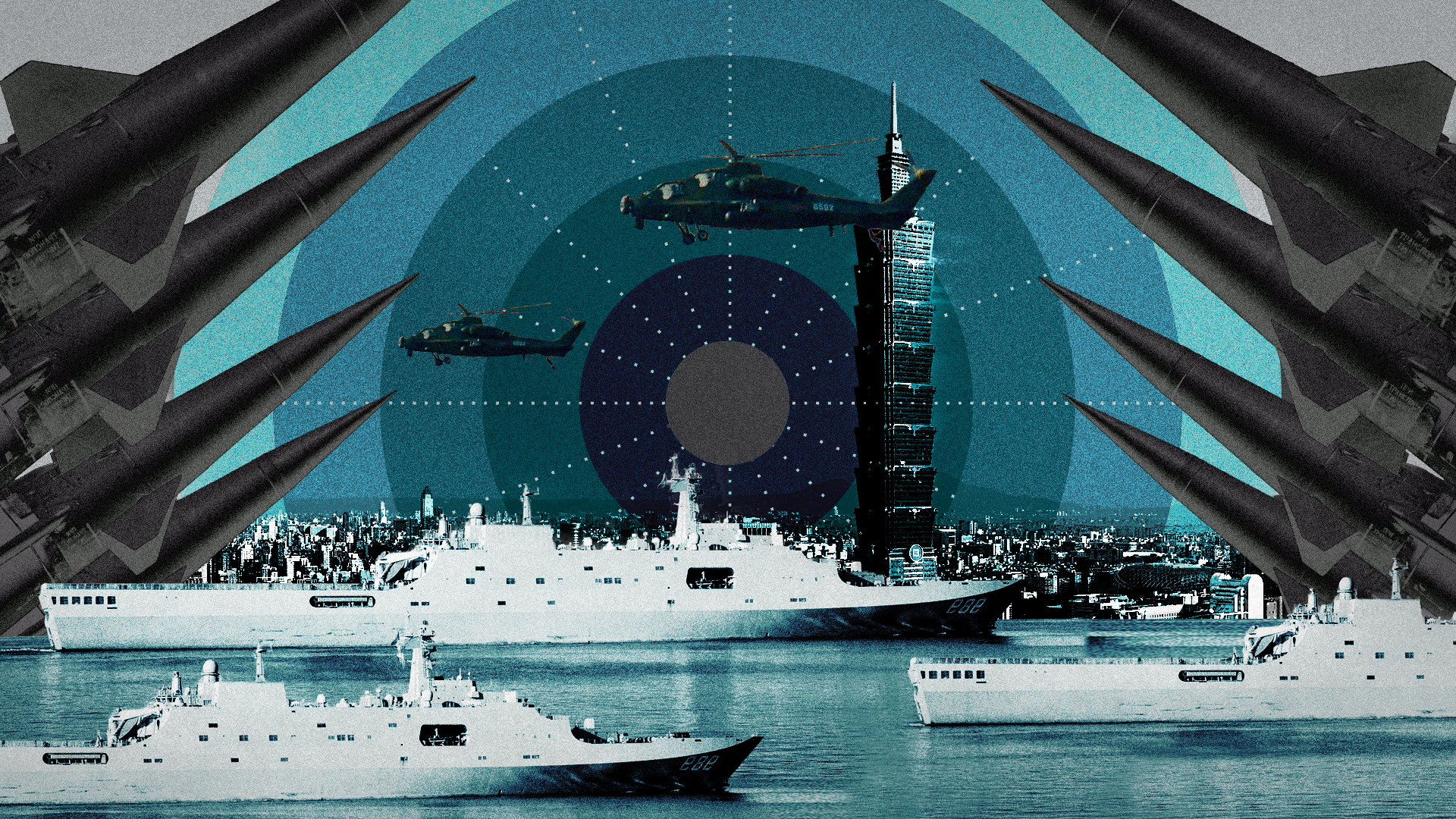
Imagine a world in which the restraints that once governed great power behavior have collapsed under the weight of ambition, fear, and opportunism. In this world, Russia has completed its conquest of Ukraine and consolidated control over its territory. The United States, under President Trump, has launched a direct military invasion of Venezuela and captured its president. China, observing the erosion of restraint and precedent, moves decisively against Taiwan. Meanwhile, voices in Europe ask whether France should simply reassert control in Mali and Burkina Faso to restore order and protect its interests.
This is not a description of current events. It is a thought experiment designed to test the durability of the international order and the logic that underpins it. For global security policymakers, the exercise is not academic. It forces a confrontation with uncomfortable questions about moral authority, the credibility of international law, and whether the world is drifting back toward an era where power alone defines legitimacy.
The Collapse of Moral Authority
Since the end of the Second World War, the international system has rested on a fragile but essential agreement. Borders should not be changed by force. Sovereignty matters. Military power should be constrained by law, norms, and collective institutions. These principles were never perfectly applied, but they formed the backbone of global stability.
Russia’s invasion of Ukraine represented a direct assault on that framework. Western governments condemned it not only because of strategic interests, but because it violated a core norm. The argument was clear. If territorial conquest is tolerated in Europe, no border anywhere is truly safe.
In the hypothetical scenario where the United States invades Venezuela and captures its president, that argument collapses. Moral authority does not survive selective application. A state cannot credibly condemn aggression while committing it. The result is not simply reputational damage. It is strategic self sabotage.
For decades, the United States has positioned itself as a defender of sovereignty and democratic choice in the Western Hemisphere. An invasion of Venezuela without a clear and universally accepted legal justification would be read globally as confirmation that power, not principle, governs behavior. Allies would question commitments. Neutral states would hedge. Adversaries would exploit the contradiction.
Moral authority in international politics is not sentimental. It is instrumental. It enables coalition building, sanctions enforcement, intelligence sharing, and diplomatic isolation of aggressors. Once lost, it is extraordinarily difficult to recover.
How Moscow and Beijing Would Interpret the Moment
Great powers do not merely react to events. They interpret patterns. If Russia succeeds in Ukraine and the United States simultaneously demonstrates willingness to overthrow governments by force, both Moscow and Beijing would draw conclusions that extend far beyond the immediate cases.
From Moscow’s perspective, Western opposition to Russian expansion would appear performative rather than principled. Russian leadership has long argued that international law is a tool wielded selectively by the West. A United States invasion of Venezuela would reinforce that narrative domestically and internationally.
This would not stop at Ukraine. It would shape Russian thinking about Moldova, Georgia, and the security of states on NATO’s eastern edge. The lesson would be simple. Determined force backed by nuclear capability and strategic patience pays dividends.
Beijing’s interpretation would be even more consequential. Taiwan sits at the center of Chinese strategic ambition and national identity. For years, Chinese leaders have weighed the risks of military action against the possibility of sustained United States resistance. That calculation depends heavily on perceptions of United States consistency, credibility, and alliance cohesion.
If Washington demonstrates that it is willing to violate sovereignty when convenient, and unable or unwilling to prevent Russian conquest in Europe, Chinese planners would see an opportunity. Not a legal opportunity, but a strategic one. Deterrence is as much psychological as it is material. Once doubt enters the equation, windows of action open.
Does Russia Gain an Enforceable Claim to Taiwan
No. International law does not operate by contagion. Russia’s actions in Ukraine do not create legal precedent for China to seize Taiwan. Taiwan’s status, while complex, is not adjudicated by events in Eastern Europe.
But legality is not the same as enforceability. In a system where norms erode and enforcement depends on power, claims backed by military capability become harder to resist regardless of their legal merit. This is the danger policymakers must confront honestly.
Taiwan’s security has always rested on deterrence and ambiguity rather than formal recognition. That deterrence depends on belief in United States resolve and the stability of international norms. If those norms are perceived as optional, Taiwan’s strategic position weakens even if its legal position does not.
This is why consistency matters. Not because law is fragile, but because belief in law is.
France, West Africa, and the Return of Imperial Thinking
The suggestion that France should re enter Mali and Burkina Faso as a dominant power taps into another dangerous temptation. When instability persists, external control can appear efficient. But history offers a harsh verdict on such thinking.
Mali and Burkina Faso face real security challenges. Insurgency, weak governance, and economic fragility are undeniable. But the idea that former colonial powers can simply impose order ignores both historical trauma and present political reality.
French military involvement in the Sahel has already generated resentment. Many local populations perceive it not as partnership but as domination. Expanding that role into overt control would almost certainly inflame resistance, empower extremist narratives, and deepen instability.
Security imposed without legitimacy does not endure. The lesson of colonialism is not merely moral. It is strategic. Durable stability requires local ownership, accountable institutions, and regional cooperation.
The appropriate role for France and Europe is support, not control. Training, intelligence sharing, economic investment, and multilateral engagement offer a path forward. Reasserting dominance would only confirm suspicions that sovereignty is respected only when convenient.
The World Smaller States Are Watching
Perhaps the most important audience for these developments is neither Washington, Moscow, nor Beijing. It is the collection of small and middle powers that rely on rules to compensate for limited strength.
If great powers openly violate sovereignty without consequence, smaller states will adapt. Some will seek protection from stronger patrons. Others will pursue independent military capabilities, including nuclear weapons. Still others will align with whichever power appears most willing to defend them, regardless of values.
This is how arms races begin. This is how regional conflicts become global ones.
Institutions like the United Nations, regional organizations, and international courts depend on belief in their relevance. When that belief fades, states return to self help. History suggests where that path leads.
Power Without Legitimacy Is Unsustainable
The central lesson of this thought experiment is not that power is irrelevant. Power matters. But power divorced from legitimacy produces instability, resistance, and eventual decline.
The post Second World War order survived not because it eliminated conflict, but because it constrained it. Even rivals operated within shared expectations. Once those expectations dissolve, escalation becomes more likely and miscalculation more dangerous.
For the United States, Russia, China, and France alike, restraint is not weakness. It is investment. A system where borders are respected, even imperfectly, is safer for all major powers than one where conquest is normalized.
A Call for Strategic Consistency
Global security policymakers face a choice. They can treat norms as tools to be used selectively, or as foundations to be defended consistently. The first path offers short term flexibility. The second offers long term stability.
Moral authority is not an abstract virtue. It is a strategic resource. Once spent, it cannot be easily replenished. If the world moves toward a model where Putin takes Ukraine, Trump takes Venezuela, China takes Taiwan, and France takes Mali and Burkina Faso, the outcome will not be order. It will be fragmentation, arms proliferation, and perpetual crisis.
The task before policymakers is not to accept that future, but to prevent it. That requires discipline, consistency, and the recognition that leadership is measured not by what a state can seize, but by what it chooses not to.